Linguistic Theory of the Universe: Fractals, Time-Space, and the Evolution of Symbols
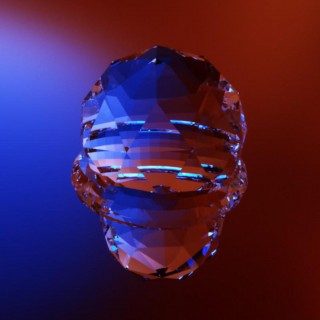
Language is not only a human invention—it may be a reflection of the universe’s deepest structures. The video Linguistic Time Space Simulation introduces a fascinating attempt to visualize this idea: fractal animations that represent linguistic time-space, suggesting that the evolution of symbols and alphabets can be modeled through mathematical and cosmological principles.
🌌 Fractals as the Blueprint of Language
- Fractals are self-similar patterns that repeat at different scales. In physics and cosmology, they often describe natural phenomena like galaxies, coastlines, or neural networks.
- Applying fractals to linguistics suggests that language itself may be a fractal system, where phonemes, morphemes, and sentences mirror universal structures.
- The simulation shows how linguistic time-space can be animated as fractal geometry, implying that communication is embedded in the same mathematical laws that govern the cosmos.
🔮 Trigrams and Runes: Ancient Codes of Meaning
- Trigrams (from the I Ching) are sets of three lines representing fundamental forces of change. They symbolize balance, duality, and transformation.
- Runes, the ancient alphabet of Northern Europe, evolved as symbolic representations of sound, meaning, and mystical power.
- The theory proposes that modern alphabets could be seen as an evolution from trigrams into runes, where abstract cosmological codes gradually became phonetic systems for everyday communication.
- This evolution highlights how symbols are not arbitrary but may emerge from deeper universal structures.
🧮 The Mathematical Challenge
- The author notes a “math formula issue” in translating trigrams into runes. This reflects the difficulty of mapping abstract fractal structures into linear alphabets.
- The challenge lies in reconciling:
- Nonlinear fractal geometry (infinite recursion, self-similarity)
- Linear linguistic systems (finite alphabets, sequential grammar)
- Solving this could mean discovering a universal formula for language evolution, bridging mathematics, cosmology, and semiotics.
🌐 Linguistic Time-Space as a Universal Theory
- If language is fractal, then time and space themselves may be linguistic constructs—patterns we interpret through symbolic systems.
- This theory suggests:
- Language is not separate from the universe; it is a manifestation of its structure.
- Alphabets are cosmological artifacts, evolving from primal codes (trigrams) into cultural scripts (runes, letters).
- Fractal animation becomes a tool to visualize how meaning unfolds across scales, from cosmic forces to human speech.
✨ Conclusion
The Linguistic Time Space Simulation is more than an artistic experiment—it is a philosophical and mathematical exploration of how language mirrors the universe. By tracing the evolution from trigrams to runes, and confronting the mathematical challenges of fractal representation, this theory opens a path toward understanding language as a cosmic fractal code.
trigram harmonics kategories

 Feng Shui home